OPTICAL
Light all the way
A mirror sends the lens's image up to a five-sided prism, which turns it through 90° and sets it the right way around. It works with the camera switched off.
See the numbers
 nikonfullframecamera
VIEWFINDERS, EXPLAINED
90° turned by the prism
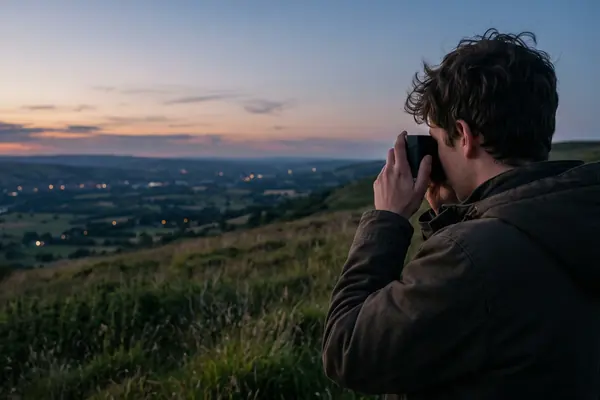
Put your eye to a camera and you see one of two things.
An optical viewfinder shows the scene itself, sent up by a mirror and turned by a prism. An electronic one shows the sensor's view on a small screen, with your settings already applied.
Updated
Compare themTHE SHORT ANSWER
Optical finders show the world as it is.
Electronic ones show the picture you will get.
OPTICAL
A mirror sends the lens's image up to a five-sided prism, which turns it through 90° and sets it the right way around. It works with the camera switched off.
See the numbersELECTRONIC
A small screen behind the eyepiece shows what the sensor records, so you see exposure and white balance before you shoot, plus aids such as focus peaking.
Compare themTRADE-OFFS
Optical finders have essentially no lag but go dark while the mirror flips up. Electronic ones can lag slightly and turn grainy in very dim light.
Try bothA QUICK FINDER CHECK
Pick a situation to see which type of viewfinder has the edge, according to the sources below. The bar shows how strong the advantage is.
Recent electronic finders have narrowed many of these gaps; trying both in person is the surest test.
TWO NUMBERS WORTH KNOWING
One figure from inside an optical finder,
one on when its blackout becomes visible.
90°
Angle a pentaprism turns the light
A pentaprism deviates a beam by a constant 90° with two internal reflections, so the image is not flipped. A roof section corrects the left-right reversal left by the mirror.
PENTAPRISM · WIKIPEDIA
1/30 s
Shutter speed where blackout shows
Mirror blackout is barely noticeable at fast speeds, but at about 1/30 s or slower an optical finder shows a brief blank frame as the mirror flips up.
BLACKOUT · DIGITAL PHOTOGRAPHY SCHOOL
Some lighter cameras use a pentamirror, three mirrors instead of a solid prism. It is lighter, but each pass through the glass loses a little brightness, and the mirrors can drift out of alignment.
FOUR WAYS TO TEST A FINDER

In a camera store or with a friend's camera, a few minutes with each type tells you more than a spec sheet.
Follow a passing car or bird. Any lag in an electronic finder shows as the view trailing behind the subject.
Look into a dark room. An optical view stays sharp but dim; an electronic view may look brighter but grainier.
Turn the exposure compensation dial. An electronic view brightens and darkens to match; an optical view stays the same.
An electronic finder is a tiny screen held less than an inch from your eye. Check the view is comfortable before you buy.
WHY REFLEX CAMERAS LOOK THROUGH THE LENS
A separate viewing window sees the scene from a slightly different place than the lens, an error called parallax that matters most close up. Single-lens reflex cameras look through the taking lens itself, so changing lenses never upsets the view.
When you press the shutter, the mirror flips out of the way, the shutter opens and closes, and the mirror drops back. Some cameras combine both systems in a hybrid finder that can show an optical or a digital view.
Questions
An optical viewfinder uses a mirror and prism to send the image from the lens to your eye. An electronic viewfinder shows the sensor's image on a small LCD or OLED screen behind an eyepiece.
Yes. It is a purely optical path, like looking through binoculars, so it needs no power. An electronic viewfinder needs the camera switched on.
The mirror flips up to let light reach the sensor, so the finder briefly blacks out. It is hard to notice at fast speeds but obvious at about 1/30 s or slower.
They can, because the image has to be processed and displayed, especially with longer exposure times. Digital Photography School notes the lag is minimal in many recent cameras.
A display aid in electronic viewfinders and screens that outlines the in-focus parts of the scene in color, which helps when focusing by hand.
Sources
ABOUT THIS NAME
nikonfullframecamera.com is part of the DoodleSale portfolio. It isn't in an auction right now, but you can ask about leasing it.